‘Bob Weir Was The Bridge’: Reid Genauer Remembers The Outward Face Of The Grateful Dead
The Strangefolk/Assembly Of Dust co-founder examines Weir’s essential role in an essay honoring the late Grateful Dead guitarist.
By Reid Genauer Jan 12, 2026 • 6:58 am PST
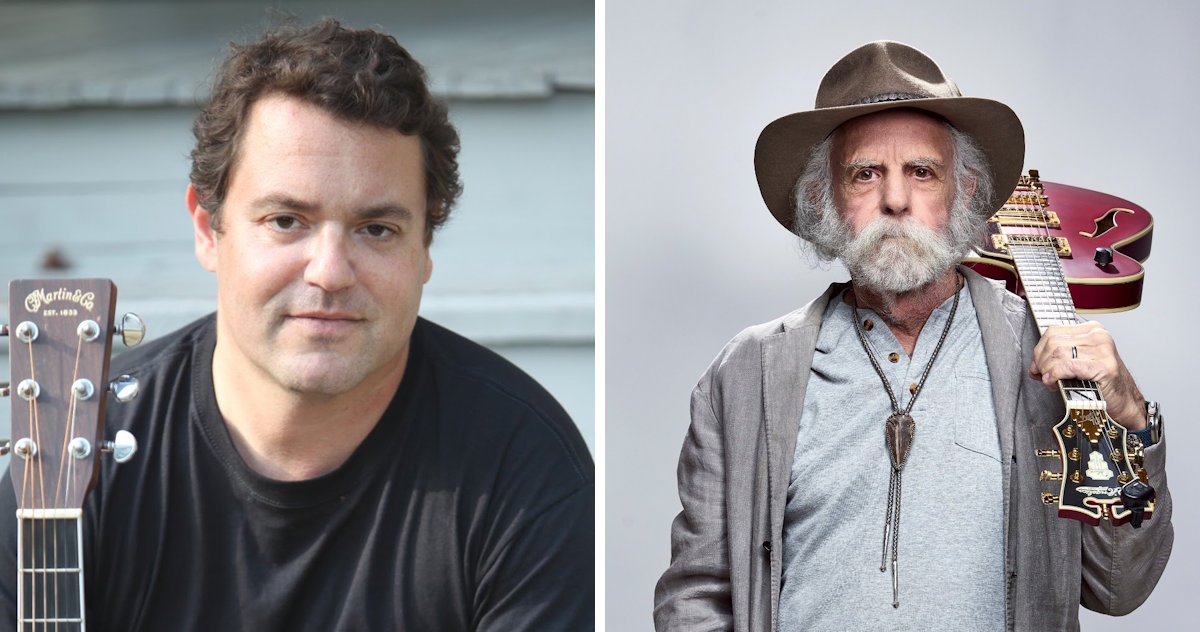
Reid Genauer, frontman for Strangefolk and Assembly of Dust, is one of many musicians deeply influenced by the Grateful Dead. Genauer, like many of us, is trying to process Bob Weir's death, as the Grateful Dead co-founding guitarist recently “crossed over” at age 78.
While contemplating Weir’s loss, Genauer hit on something that he had never quite understood about Bobby’s role in the Dead — Weir was the outward face and Jerry the inward. Reid, who covered Grateful Dead classics “To Lay Me Down,” “Althea” and “Tennesse Jed” with Strangefolk bandmate Jon Trafton for our Songs Of The Own video series in 2015, contributed the essay he wrote in the wake of Bob Weir’s death to JamBase. Read Genauer’s remembrance below:
My take on the Grateful Dead was that they weren’t just a great band — they were a long, public experiment in what happens when songs, improvisation, and community are given equal weight. The jams get the headlines, but the truth is simpler and deeper: the Dead worked because the songbook worked. More like a psalm book. The stories, the melodies, the harmonic openness – the words — that’s why the music could stretch without collapsing. That’s why it survived endless nights, endless versions, endless hands. And why its virtually impossible to have a bad Dead cover band.
Bob Weir is often described as the rhythm guitarist, or the second guitar, or even — unfairly — a kind of understudy to Jerry Garcia. But his real role was something subtler and harder to name: Bob was the bridge. Between structure and freedom. Between the old songs and the living moment. Between the band and the crowd.
Garcia carried the inward, searching voice — melodic, vulnerable, almost surrendered to the music. When Jerry sang or played, it felt like you were overhearing something private, something still forming. He didn’t present answers so much as inhabit questions. His center of gravity pulled the music inward, toward reflection, dissolution, and grace.
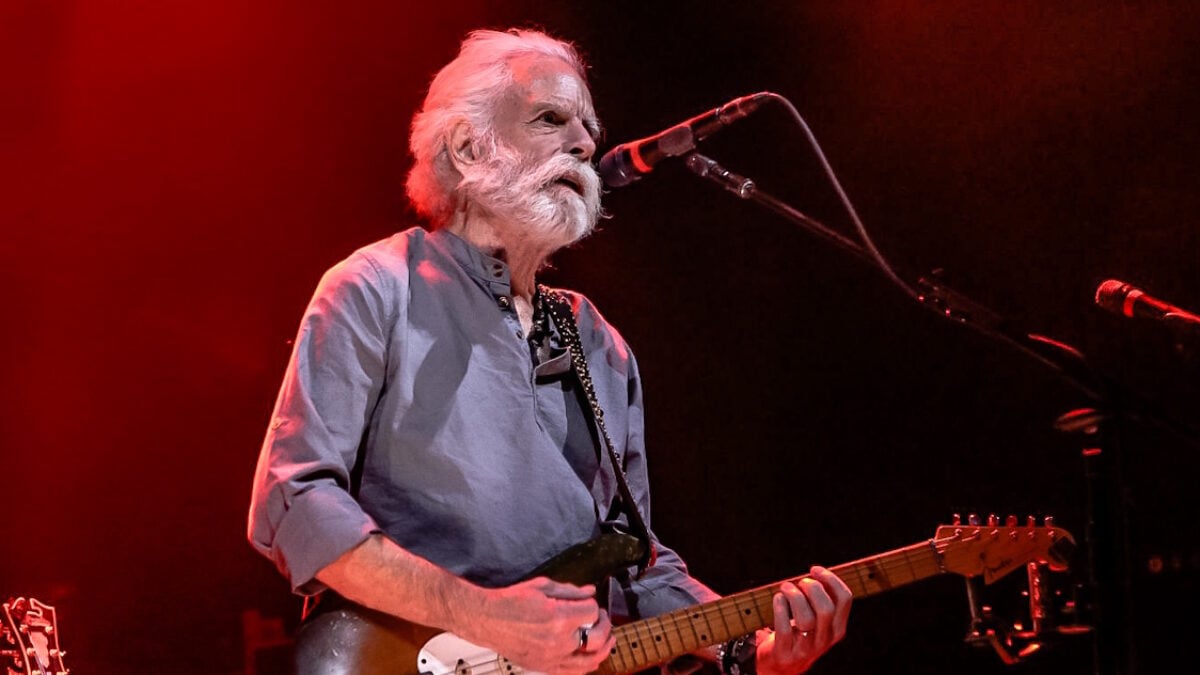
Bob carried the outward one — and that outwardness was the hook.
His voice faced the room. It made eye contact. It said come with us. Even when the lyrics were unresolved or morally complicated, the delivery was declarative, embodied, human. Bob’s presence oriented the music toward participation. You didn’t just listen — you entered.
That outward-facing role is easy to underestimate, but it’s essential. In a band built around exploration and ambiguity, someone had to stand at the threshold and keep the door open. Bob did that. Night after night. Song after song. His guitar parts weren’t background; they were architecture — leaving space, pushing time, refusing to lock things down too neatly, shaping a frame the rest of the band could lean into without being confined by it.
His songs, especially with John Perry Barlow, weren’t mythic in the Robert Hunter sense. They were present-tense, questioning, restless. They didn’t sound like folklore handed down — they sounded like someone wrestling with belief, responsibility, love, consequence, and freedom in real time. They asked what it costs to belong. What it costs to keep going. What it means to stand in front of people and still be honest.
What Bob’s passing reveals — especially now, long after Garcia — is something I don’t hear said enough — especially now — is that he wasn’t there to compete with the inward pull of the music. He was there to keep it oriented toward people
After Jerry died, it wasn’t obvious the music could keep living without becoming a museum piece. The inward center was gone. What Bob showed, quietly and persistently, was that the outward ethic still worked. That the songs could still invite. That the music could still breathe. That this thing didn’t require replication — it required continuation.
He didn’t keep the Dead alive by freezing them in amber. He kept them alive by staying inside the ethic: let the songs remain unfinished, let the music stay communal, let new hands find their way in.
That’s why this loss feels so heavy. Not just because another giant is gone, but because one of the last living carriers of the invitation is gone. Someone who understood that the real legacy wasn’t perfection or transcendence — it was permission. Permission to be human. To be in process. To trust that if the song is strong enough, it will outlive you.
The ethos is still here.
The songs are still here.
The catalog still holds.
But now the responsibility to face outward — to keep inviting people in — shifts more fully to the rest of us.
That’s what I’m grieving.
And that’s what I’m grateful for.
– Reid Genauer
Advertisement
Loading tour dates
